


By using our website, you agree to the use of cookies as described in our Cookie Policy
Can You Visit Meteor Crater During Your Stay in Flagstaff?
Most people think Flagstaff is just about pine trees and mountain air. But thirty-five miles east, sitting in the Arizona desert like a scar from another world, is one of the most dramatic impact sites on the planet. Meteor Crater isn't some roadside attraction with a gift shop and a photo op. It's a legitimate scientific landmark — and if you're in northern Arizona and you skip it, you're missing the point.
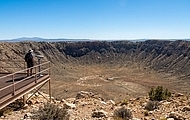
The crater doesn't care if you understand geology. It doesn't need your approval. But standing at the rim, staring into that mile-wide bowl carved out fifty thousand years ago by a chunk of iron traveling at twenty-six thousand miles per hour, you feel something shift. This isn't a park. It's proof that the universe plays rough — and we just happen to live on the board.
The Drive Is Easier Than You Think
Getting to Meteor Crater from Flagstaff takes about forty minutes. You hop on Interstate 40 heading east, and the route is clean and simple. No winding mountain roads. No guesswork. Just desert, sky, and a clear shot to one of the best-preserved impact craters anywhere.
Whether you're driving yourself or booking a guided tour out of Flagstaff, the trip fits comfortably into a morning or afternoon. And unlike some attractions that overpromise and underwhelm, this one delivers exactly what it says on the sign.
What Makes This Crater Different
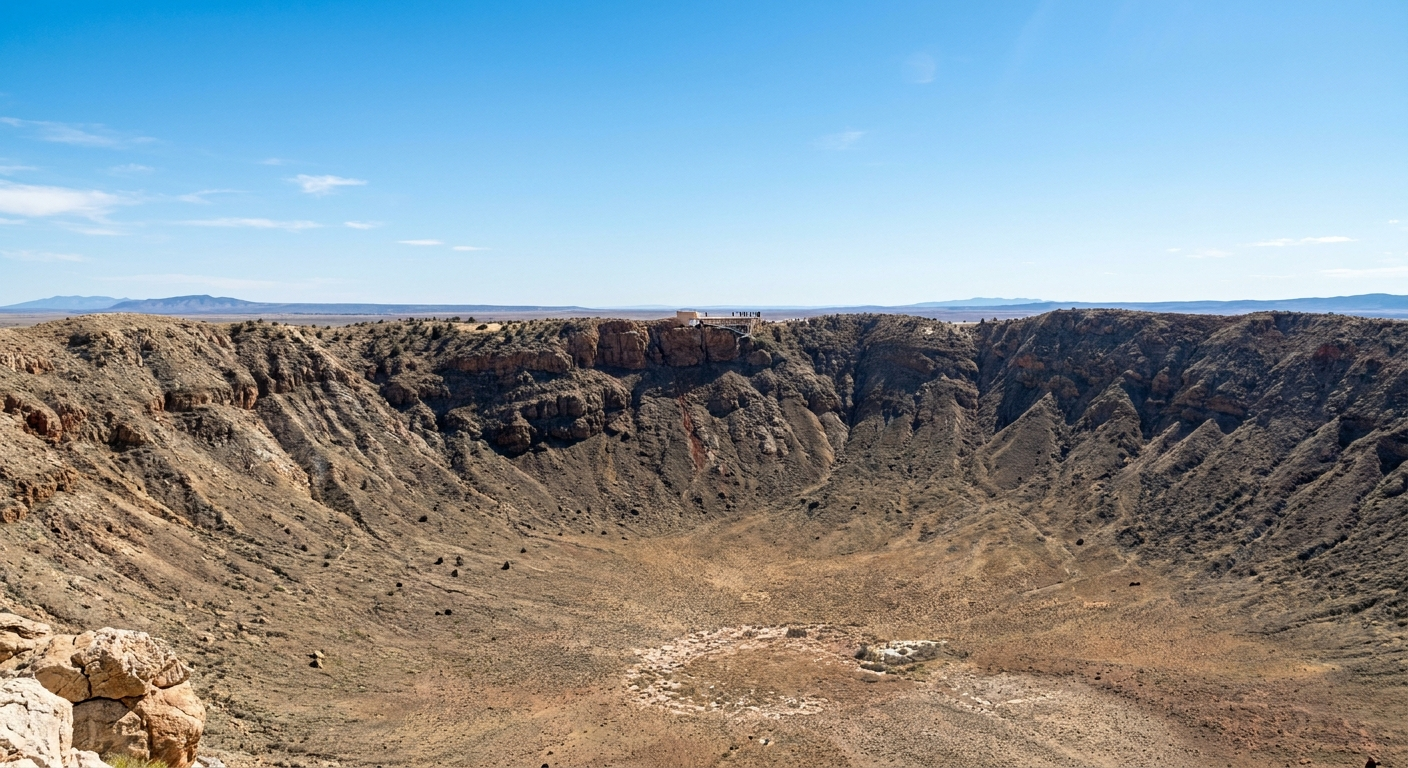
Meteor Crater — also called Barringer Crater — formed when a nickel-iron meteorite slammed into what is now northern Arizona. The impact vaporized most of the meteorite and excavated millions of tons of rock in seconds. What's left is a bowl nearly six hundred feet deep and almost a mile across, with raised rims you can walk along.
Unlike craters that have eroded or filled in over time, this one stayed intact. The dry desert climate preserved it. NASA used it to train Apollo astronauts because the terrain mimics lunar conditions. That's not trivia — that's relevance. This site has been central to understanding both planetary geology and space exploration.
What You'll Actually See and Do
The Visitor Center isn't some dusty lobby with a few placards. It's a modern facility packed with interactive exhibits, meteorite samples, and a theater showing footage of the impact event. You'll see fragments of the original meteorite, learn how scientists dated the crater, and get a sense of just how much energy was released in that collision.
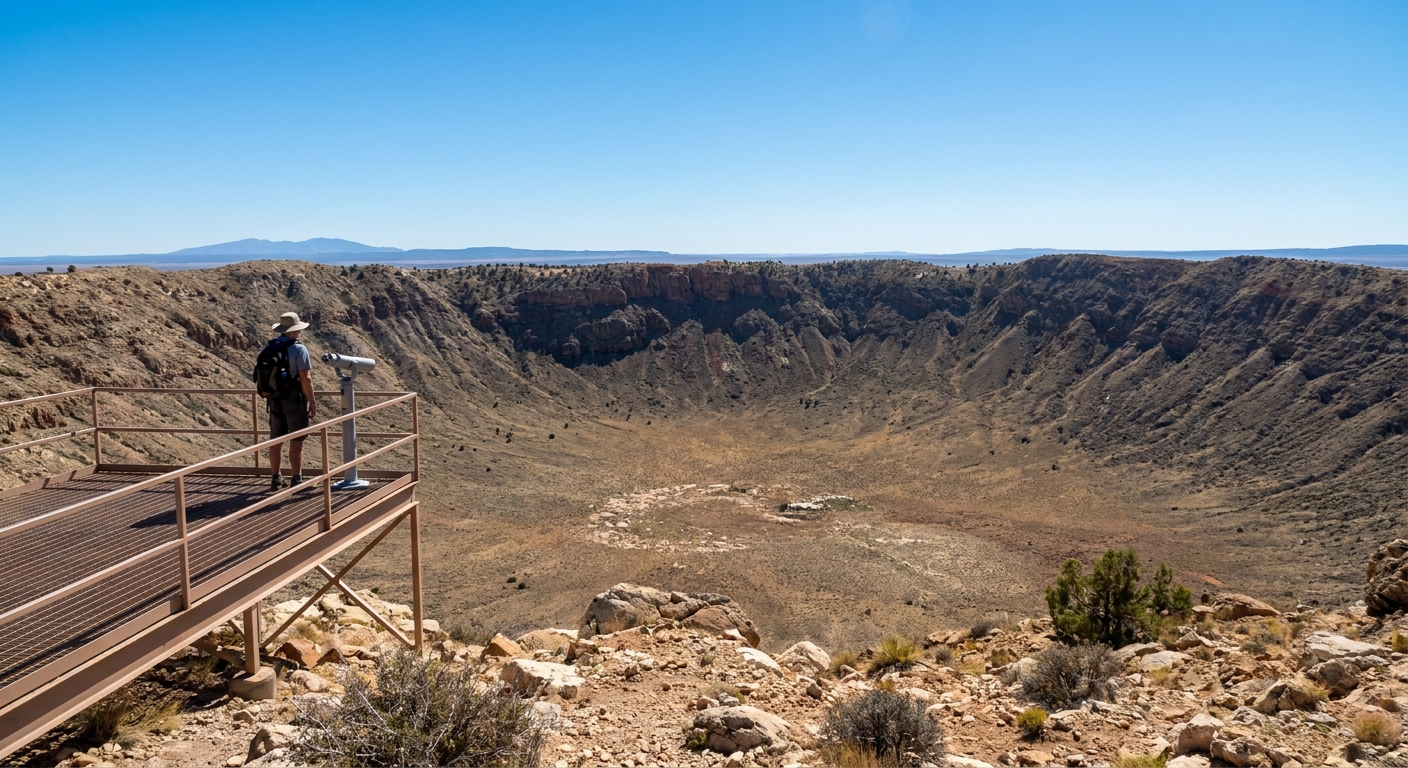
Guided rim tours run throughout the day, led by people who know the science and the history. They'll walk you to key viewpoints, explain the geology, and answer the questions most visitors don't think to ask. There are also observation decks with mounted telescopes, so you can zoom in on specific features and get a real sense of scale.
- Interactive exhibits covering impact physics and crater formation
- Theater presentations with high-quality visuals and expert narration
- Guided rim walks that add context you won't get on your own
- Meteorite samples you can see up close, including pieces recovered from the site
- Observation decks with telescopes for detailed viewing
Timing Your Visit Matters
Meteor Crater is open year-round, but not all seasons are created equal. Spring and fall offer the best conditions — moderate temperatures, clear skies, and fewer crowds. Summer can hit triple digits, and the exposed rim offers zero shade. If you're visiting between June and August, bring water, sunscreen, and a hat. Don't assume the desert will go easy on you.
Winter visits are possible, but the wind on the rim can be brutal. Temperatures drop fast once the sun sets, and snow isn't out of the question. Check the forecast before you go, and plan your day accordingly. The site typically opens earlier and stays open later during summer months, so verify hours on their official website before heading out.
Admission and What It Covers
There's an admission fee, and it's not a token amount — but it covers everything. You're not paying extra for exhibits, tours, or access to the rim. One ticket gets you the full experience, including the museum, theater, and guided walks. Kids under five get in free, and discounts are available for military families and seniors.
If you're budget-conscious, factor in the drive and the time. This isn't a fifteen-minute stop. Plan for at least two to three hours if you want to absorb the exhibits, take a rim tour, and spend time at the overlooks. There's a café on-site and a gift shop, so you won't need to rush back to Flagstaff for food or supplies.
What We Tell People Before They Go
We've sent plenty of travelers to Meteor Crater, and the ones who enjoy it most are the ones who show up prepared. That means comfortable shoes — you'll be walking on uneven surfaces. It means layers, because desert weather shifts fast. And it means bringing a camera, because the views from the rim are worth documenting.
Don't skip the guided tour just because you think you can read the signs on your own. The guides offer insights you won't get from a plaque, and they're trained to answer questions about everything from impact velocity to astronaut training. If you're traveling with kids, the interactive exhibits keep them engaged without dumbing down the science.
- Wear sturdy, comfortable shoes for walking the rim and trails
- Bring layers — desert temperatures swing more than you'd expect
- Pack sunscreen, a hat, and water if visiting in warmer months
- Join a guided rim tour to get the full story behind the crater
- Allow at least two to three hours to see everything without rushing
Why This Site Still Matters
Meteor Crater isn't just a hole in the ground with a parking lot. It's a teaching tool, a research site, and a reminder that Earth's history includes some seriously violent chapters. Scientists still study it. Engineers use it to test equipment. Educators bring students here to show them what planetary science looks like in real life.
For visitors, it's a chance to step outside the usual tourist loop and engage with something that's both ancient and immediate. You're not looking at a replica or a simulation. You're standing at the edge of an actual impact site, and that matters. It changes how you think about time, space, and the forces that shape the world we live on.
How to Make the Most of Your Trip
Start by checking the Meteor Crater website for current hours, ticket prices, and any special events. Road conditions on I-40 are generally excellent, but it's worth confirming if you're traveling in winter or during monsoon season. Fuel up in Flagstaff before you go — there are gas stations near the crater, but prices can be higher.
If you're staying in Flagstaff for more than a day or two, schedule Meteor Crater as a half-day trip. Pair it with stops at Walnut Canyon or Wupatki National Monument if you're building a full itinerary. And if you're traveling with people who aren't into science or geology, don't worry — the sheer scale of the crater is enough to impress anyone.
- Confirm hours and admission prices on the official website before leaving
- Fill up your tank in Flagstaff to avoid higher prices near the site
- Pair your visit with other nearby attractions for a full-day adventure
- Arrive early in the day during peak season to avoid crowds
- Check weather conditions, especially in summer or winter months
The Real Reason to Add This to Your Flagstaff Plans
Flagstaff has plenty to offer — mountain trails, historic downtown, craft breweries. But Meteor Crater is something different. It's not cozy or comfortable. It's raw, vast, and scientifically significant. And it's close enough that there's no excuse to skip it.
We've seen too many travelers stick to the same predictable stops and miss the one thing that actually stands out. Don't be that person. Meteor Crater is a short drive, a reasonable fee, and a guaranteed conversation starter. If you're in northern Arizona and you're looking for something that matters, this is it.
Quick Answers to the Questions We Hear Most
- Is Meteor Crater worth the drive from Flagstaff? Yes. It's forty minutes, the road is easy, and the site delivers on every level.
- Can you see the crater without paying? No. The site is privately owned, and admission is required for rim access and exhibits.
- How much time should you plan? Two to three hours minimum if you want to see everything, including the guided tour.
- Is it kid-friendly? Absolutely. The exhibits are engaging, and the scale of the crater impresses all ages.
- What if the weather is bad? Indoor exhibits and the theater are available, but rim tours may be limited in high winds or storms.
Fuel Smart, Document Everything, and Don't Rush
Meteor Crater isn't the kind of place you blast through in twenty minutes. It's not a photo op with a gift shop attached. It's a legitimate scientific site that happens to be open to the public, and treating it that way makes the experience better. Show up prepared, give yourself time, and don't assume you know what you're looking at until you've heard the full story.
Flagstaff is a great base for exploring northern Arizona. But if you're serious about seeing something that's genuinely rare and scientifically important, Meteor Crater is the move. It's close, it's accessible, and it's one of the few places on Earth where you can stand at the edge of a cosmic collision and feel the weight of what happened there. That's not something you get from a postcard.
Ready to Plan Your Flagstaff Adventure?
We know how much the right local insight can elevate your trip, whether you’re chasing natural wonders or hidden gems around Flagstaff. If you want more tips, custom recommendations, or help making your northern Arizona stay unforgettable, let’s connect. Call us at 928-522-8228 or get in touch—we’re here to help you make the most of every moment in this incredible region.
‹ Back
Recent Posts
-
What Makes Fall a Great Time for Flagstaff Vacation Rentals?
August 13, 2026
-
-

-
-